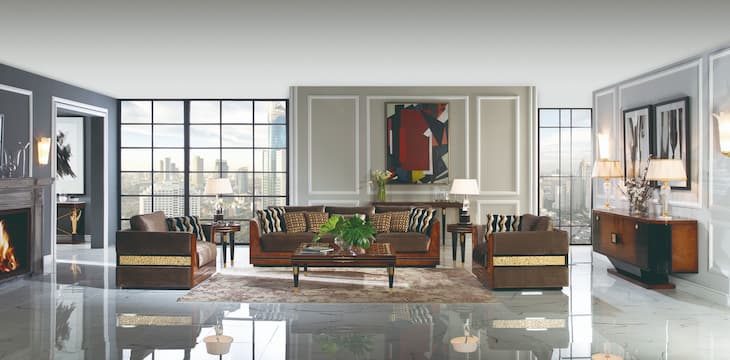
In luxury interior design, lighting is not only used for visibility but is considered a strategic tool that defines the atmosphere, establishes a hierarchy within spaces, highlights materials, and enhances the sensory experience. One of the most frequently used techniques in premium interior design projects is layered lighting , which allows for combining different types of light to create sophisticated, flexible environments that are consistent with the overall style.
Layered lighting in premium projects: an updated practical guide
From Mariner Luxury we bring you this practical guide in which we take a tour of the principles, techniques and solutions needed to design premium lighting systems that transform each room into an elegant and functional space.
Key principles before designing
Function of space and visual hierarchy
Before selecting the lighting fixtures, it is essential to analyze the function of each space , since living rooms, dining rooms, suites and offices have different requirements: while a living room seeks comfort and versatility, an executive office needs precision and efficiency.It is also important to consider the visual hierarchy , since there are certain areas or pieces that require greater light intensity or emphasis, instead of background lighting that maintains uniformity and visual comfort.
Recommended color temperature and CRI
Color temperature directly influences the perception of the environment: warm tones (2700–3000 K) provide comfort and a cozy feeling, while neutral tones (3500–4000 K) promote concentration and highlight natural materials.The CRI (Color Rendering Index) must be above 90 in premium projects, ensuring that the colors of furniture, artwork and finishes are perceived faithfully, especially in luxury spaces where detail makes the difference.
Layers of light and how to use them
Ambient light (uniform and comfortable base)
Ambient lighting ( recessed, linear, or coved ceiling lights) forms the basis of the lighting system and is characterized by providing uniformity and visual comfort . Its main function is to offer sufficient light for safe movement and create a homogeneous surface upon which other lighting elements can be superimposed.Task light (function and accuracy)
Task lighting is used for specific activities : reading, working, food preparation, and applying makeup. This type of light is found in wall lights above desks, table lamps in reading areas, or spotlights above kitchen countertops. These lights must be direct and well-oriented to avoid shadows or glare.Accent lighting (spotlight, wallwashing and dramatization)
Accent lighting is used to highlight decorative elements, works of art, or architectural textures, adding depth and visual richness to a space. It can be applied using recessed spotlights, track lighting, or projectors with narrow lenses to create a dramatic effect, or through wallwashing to evenly illuminate a wall and highlight its materiality.Decorative lighting (chandeliers and statement pieces)
Decorative lighting combines functionality with aesthetics : chandeliers, sculptural lamps or "statement" pieces, besides illuminating, also act as central design objects.In premium projects, these elements must harmonize with the overall style of the space and the surrounding finishes, to enhance the visual narrative.
Concealed architectural lighting (lines, recesses, beacons)
Concealed architectural lighting is integrated into ceilings, moldings, niches, or baseboards to create sophisticated environments without direct visibility of the light source, reinforce volumes , guide circulation , and provide a subtle and contemporary touch of luxury. This layer includes linear lighting, coved lighting, bollards, and recessed LED strips.Selection of luminaires and sources
Recessed, linear and wall washers
Recessed and linear lights are essential for ambient and accent lighting, while wall washers serve to provide vertical uniformity and highlight materials such as marble or fine woods.Wall lights, table lights and floor lights
Wall lights, table lamps , and floor lamps allow you to adjust task lighting and add decorative layers. When selecting these items, consider their proportions, heights, and style to create visual continuity with the furniture and architectural elements.Suspensions and large formats
Large-format pendant lights and luminaires often become the focal point of living rooms, dining rooms, or foyers. To avoid visual disharmony, it is recommended to adjust the height, diameter, and proportion of these pieces to the scale of the space.Optics, beam aperture and distribution
To boast of proper optics, the following must be chosen:• Narrow beams (spot) - Accent light.
• Medium beams - Task light.
• Open beams - Ambient light.
It is important to note that a uniform distribution prevents glare and ensures that each layer fulfills its function without interfering with others.
Quick calculation and proportions
Lumens and illuminance levels are indicative of usage
In premium projects, the indicative illuminance levels are:• Living room: 150–250 lux.
• Dining room: 200–300 lux on table.
• Kitchen/office: 400–600 lux on work surfaces.
• Bedroom : 100–150 lux general, 300 lux in dressing tables.
Suspension heights and part dimensions
Chandeliers suspended over tables or islands are usually placed 65–75 cm above the surface, while chandeliers in foyers require a minimum clearance height of 2.4–2.6 m.The dimensions of the pieces should be proportional to those of the space and the furniture in which they are located.
Control and scenes
Regulation (dimmers, DALI/DMX) and home automation
systems , DALI or DMX integrated with home automation, allow you to adjust the intensity and color, optimizing comfort and efficiency.Being able to manage all lighting layers from a single control panel is undoubtedly a premium differentiator.
Scenes by moment: reception, dinner, reading and relaxation
To enhance the perception of luxury and sophistication and the flexibility of the space, it is recommended to configure predefined scenes , as this allows you to change the lighting according to the activity taking place: intimate dinner, occasional reading, relaxation, etc.Guide by stay (practical application)
Lounge and conversation areas
The ideal way to create spaces of comfort and depth is to combine uniform ambient light with accents in works of art and table lamps .Large-format hanging pieces can act as a central element of the room.
Dining room and main table
pendant lighting above the table defines the room's composition. For more uniform visibility, ambient lighting is recommended, supplemented with wall sconces or indirect linear lighting on walls or ceilings.Bedroom suite and dressing room
In bedrooms, the ambient lighting should be soft and warm , while in dressing rooms, task lighting should be implemented , with decorative wall lights to reinforce the style.Foyer and circulation
To illuminate the entrance halls, the best option is to choose recessed and beacon lights , which guide circulation and highlight architectural elements, or suspension lights and chandeliers , which mark the welcome and reinforce the visual impact.Formal kitchen and bar
Countertops , bars, and preparation areas need precise and bright lighting, which is why choosing the right task light is essential .Ambient lighting is a good option for maintaining uniformity and comfort.
Wellness bathroom and shadowless mirrors
Ideally, ambient light should be combined with backlit mirrors , highlighting the fine materials and avoiding shadows on the face.Executive home office
To illuminate workspaces, the most suitable solution is to install a powerful task light on the desk, combined with ambient light and decorative lamps , to maintain comfort and reinforce the corporate or luxury residential identity.Materials, finishes and style
Precious metals, artistic glass and high-gloss lacquers
The right selection of metals, artistic glass, and high-gloss lacquers is essential to enhancing the character of a room and increasing the perception of luxury. Furthermore, it is crucial that the lighting interacts with these elements, highlighting their textures and reflections.How to harmonize classic and contemporary pieces
For classic and contemporary pieces to combine successfully, a balance is essential. For example, large-format pendant lights can be used with contemporary wall lights and concealed linear lighting to achieve a harmonious and sophisticated result.If you're looking to elevate the lighting in your spaces to a truly premium level, don't hesitate to contact Mariner Luxury. We offer the finest lighting fixtures and a team of specialists who will guide you through the design and implementation of layered lighting projects, guaranteeing sophisticated, functional results tailored to the specific needs of each room.